
P
Patrick K.
Guest
En otro esfuerzo por elevar la calidad del foro (e inspirado en el posting “reinicio de produccion del Twin Otter”) quisiera presentarles un avion, o mejor dicho, una verdadera “astronave” de la que lamentablemente poco se sabe y poco se reconoce en el mundo; su historia plagada de polemica, politica, y de misterios que nunca se van a comprender. Sin embargo, este aparato no solo ha sido precursor e innovador, sino una verdadera obra de arte que dejo al mundo un legado de desarrollo tecnico (y de personas) de lo mas fino en ingenieria aero-espacial. Algunos lo consideran como “la flecha que llego a la luna…”
Les presento el CF-105 Mk1 AVRO ARROW
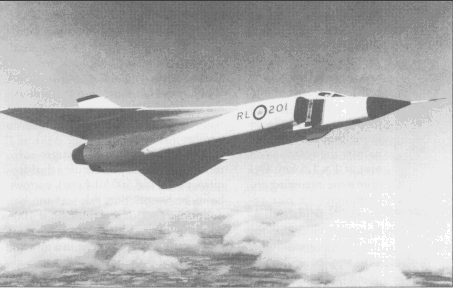
Y les comparto unos links seleccionados para aquellos interesados en la historia de esta magnifica aeronave (todos estan en inlges). Y tambien para aquellos interesados en el Fly-By-Wire…
http://en.wikipedia.org/wiki/Avro_Arrow
http://archives.cbc.ca/IDD-1-75-275/science_technology/avro_arrow/ (videos)
http://www.airforce.forces.gc.ca/equip/historical/arrowlst_e.asp
(archivo) The CF-105 Avro Arrow was:
First aircraft designed with digital computers being used for both aerodynamic analysis and designing the structural matrix (and a whole lot more).
First aircraft design to have major components machined by CNC (computer numeric control); i.e., from electronic data which controlled the machine.
First aircraft to be developed using an early form of "computational fluid dynamics" with an integrated "lifting body" type of theory rather than the typical (and obsolete) "blade element" theory.
First aircraft to have marginal stability designed into the pitch axis for better maneuverability, speed and altitude performance.
First aircraft to have negative stability designed into the yaw axis to save weight and cut drag, also boosting performance.
First aircraft to fly on an electronic signal from the stick and pedals. i.e., first fly-by-wire aircraft.
First aircraft to fly with fly by wire and artificial feedback (feel), not even the first F-16's had this.
First aircraft designed to be data-link flyable from the ground.
First aircraft designed with integrated navigation, weapons release, automatic search and track radar, data-link inputs, home-on-jamming, infrared detection, electronic countermeasures and counter-countermeasures operating through a DIGITAL brain.
First high wing jet fighter that made the entire upper surface a lifting body. The F-15, F-22, Su-27 etc., MiG-29, MiG-25 and others certainly used that idea.
First sophisticated bleed-bypass system for both intake and engine/exhaust, everybody uses that now. First by-pass engine design. (all current fighters have by-pass engines).
First combination of the last two points with an "ejector" nozzle that used the bypass air to create thrust at the exhaust nozzle while also improving intake flow. The F-106 didn't even have a nozzle, just a pipe.
Use of Titanium for significant portions of the aircraft structure and engine.
Use of composites (not the first, but they made thoughtful use of them and were researching and engineering new ones).
Use of a drooped leading edge and aerodynamic "twist" on the wing.
Use of engines at the rear to allow both a lighter structure and significant payload at the centre of gravity, everybody copied that.
Use of a long internal weapons bay to allow carriage of specialized, long-range standoff and cruise missiles. (not copied yet really).
Integration of ground-mapping radar and the radar altimeter plus flight control system to allow a serious-strike/reconnaissance role.
The first to propose an aircraft be equally adept at those roles while being the air-superiority fighter at the same time. (Few have even tried to copy that, although the F-15E is an interesting exception.
First missile armed aircraft to have a combat weight thrust to weight ratio approaching 1 to 1, few have been able to copy that.
First flying 4,000 psi hydraulic system to allow lighter and smaller components.
First oxygen-injection re-light system.
First engine to have only two main bearing assemblies on a two-shaft design.
First to use a variable stator on a two-shaft engine.
First use of a trans-sonic first compressor stage on a turbojet engine.
First "hot-streak" type of afterburner ignition.
First engine to use only 10 compressor section in a two shaft design.
Saludos y espero lo encuentren interesante
Les presento el CF-105 Mk1 AVRO ARROW
Y les comparto unos links seleccionados para aquellos interesados en la historia de esta magnifica aeronave (todos estan en inlges). Y tambien para aquellos interesados en el Fly-By-Wire…
http://en.wikipedia.org/wiki/Avro_Arrow
http://archives.cbc.ca/IDD-1-75-275/science_technology/avro_arrow/ (videos)
http://www.airforce.forces.gc.ca/equip/historical/arrowlst_e.asp
(archivo) The CF-105 Avro Arrow was:
First aircraft designed with digital computers being used for both aerodynamic analysis and designing the structural matrix (and a whole lot more).
First aircraft design to have major components machined by CNC (computer numeric control); i.e., from electronic data which controlled the machine.
First aircraft to be developed using an early form of "computational fluid dynamics" with an integrated "lifting body" type of theory rather than the typical (and obsolete) "blade element" theory.
First aircraft to have marginal stability designed into the pitch axis for better maneuverability, speed and altitude performance.
First aircraft to have negative stability designed into the yaw axis to save weight and cut drag, also boosting performance.
First aircraft to fly on an electronic signal from the stick and pedals. i.e., first fly-by-wire aircraft.
First aircraft to fly with fly by wire and artificial feedback (feel), not even the first F-16's had this.
First aircraft designed to be data-link flyable from the ground.
First aircraft designed with integrated navigation, weapons release, automatic search and track radar, data-link inputs, home-on-jamming, infrared detection, electronic countermeasures and counter-countermeasures operating through a DIGITAL brain.
First high wing jet fighter that made the entire upper surface a lifting body. The F-15, F-22, Su-27 etc., MiG-29, MiG-25 and others certainly used that idea.
First sophisticated bleed-bypass system for both intake and engine/exhaust, everybody uses that now. First by-pass engine design. (all current fighters have by-pass engines).
First combination of the last two points with an "ejector" nozzle that used the bypass air to create thrust at the exhaust nozzle while also improving intake flow. The F-106 didn't even have a nozzle, just a pipe.
Use of Titanium for significant portions of the aircraft structure and engine.
Use of composites (not the first, but they made thoughtful use of them and were researching and engineering new ones).
Use of a drooped leading edge and aerodynamic "twist" on the wing.
Use of engines at the rear to allow both a lighter structure and significant payload at the centre of gravity, everybody copied that.
Use of a long internal weapons bay to allow carriage of specialized, long-range standoff and cruise missiles. (not copied yet really).
Integration of ground-mapping radar and the radar altimeter plus flight control system to allow a serious-strike/reconnaissance role.
The first to propose an aircraft be equally adept at those roles while being the air-superiority fighter at the same time. (Few have even tried to copy that, although the F-15E is an interesting exception.
First missile armed aircraft to have a combat weight thrust to weight ratio approaching 1 to 1, few have been able to copy that.
First flying 4,000 psi hydraulic system to allow lighter and smaller components.
First oxygen-injection re-light system.
First engine to have only two main bearing assemblies on a two-shaft design.
First to use a variable stator on a two-shaft engine.
First use of a trans-sonic first compressor stage on a turbojet engine.
First "hot-streak" type of afterburner ignition.
First engine to use only 10 compressor section in a two shaft design.
Saludos y espero lo encuentren interesante